Longevity Begins with Brain Health
Assess brain function today, identify modifiable risk factors, and build a personalized plan to maintain mental sharpness, memory, and brain health over time.
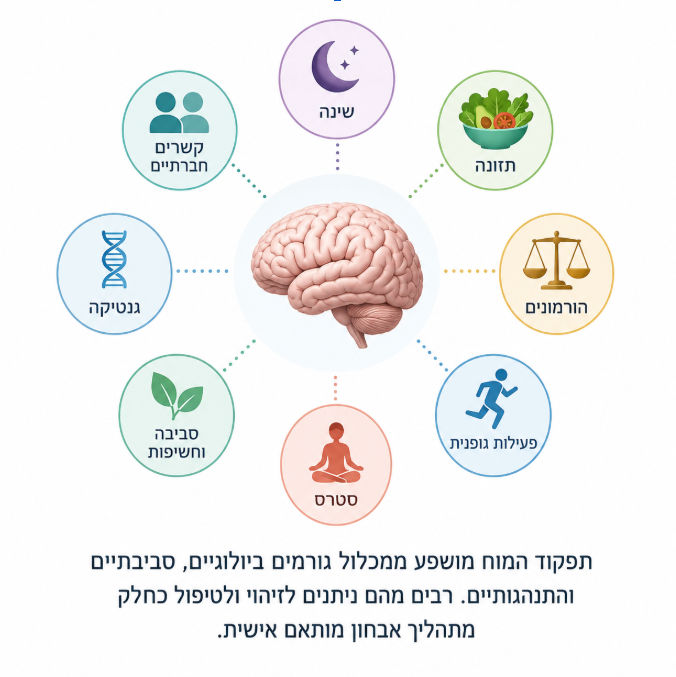
What Is Brain Health?
Attention and Concentration
Memory and Learning
Thinking Speed
Planning and Decision-Making
Language and Word Retrieval
Mood and Mental Energy
Daily Functioning and Independence
How Is Your Brain Functioning Today?
You do not need to wait for memory decline in order to get checked. An assessment of brain function can also be suitable for those who want to maintain mental sharpness, performance, and brain health over time.
You may want to consider an assessment of brain function if:
You feel a change in memory, concentration, or mental sharpness
You experience “brain fog” or mental fatigue
There is a decline in functioning at work, in studies, or in daily life
There is a family history of cognitive decline or neurological diseases
You feel well, but want to preserve your brain, improve performance, and age better
The brain is part of our health. Why not check it too?
What Does a Brain Health Assessment Include?
Review of brain imaging (if available)
Neurological assessment
Cognitive assessment
Sleep review
Lifestyle review
Identification of metabolic factors
Hormonal profile
Review of medications and supplements
Assessment of environmental exposures
Additional tests as needed
What Is Longevity and Why Is It Important?
Longevity is a field of medicine focused on extending healthy lifespan — not just living longer, but maintaining optimal physical, cognitive, and mental function over the years.
In the field of brain health, the approach focuses on the early identification of subtle changes in cognitive function, understanding biological and environmental risk factors, and personalized intervention to preserve mental sharpness over time.

Recommendations from the Clinic

 Yuval roi
Trustindex מוודא שהמקור המקורי של הסקירה הוא Google.
הגעתי לד״ר קארין אחרי תקופה שבה הרגשתי ירידה בריכוז ובחדות, ולא באמת הבנתי מה עומד מאחורי זה. כבר מהפגישה הראשונה הרגשתי שיש כאן הסתכלות אחרת, יסודית ורחבה יותר. לא רק טיפול בתסמין, אלא ניסיון להבין מה באמת קורה ולבנות תכנית שמתאימה לי. ד״ר קארין מקצועית, קשובה ומסבירה הכול בגובה העיניים. יצאתי עם הרבה יותר בהירות וכיוון ברור להמשך. ממליץ בחום.
Frequently Asked Questions
I’m 40–50 Years Old and Feel a Decline in Mental Sharpness. Is It Too Early?
Not at all. In many cases, it is precisely at this age that people begin to feel the effects of overload, poor-quality sleep, an imbalanced diet, ongoing stress, or exposure to harmful environmental factors. Early evaluation makes it possible to understand each person’s individual factors and tailor the treatment plan more precisely.
Can Nutrition Really Affect Memory and Concentration?
Yes. For a significant proportion of people, nutrition and metabolic health have a direct impact on alertness, concentration, energy, and cognitive sharpness. They also have a direct effect on inflammatory markers, blood sugar and lipid balance, chronic digestive problems, and various autoimmune diseases.
As part of a medical assessment, nutritional and metabolic factors affecting brain function can be identified, and a personalized plan can be developed according to the findings and clinical needs.
Is It Also Suitable for Someone Who Does Not Want Medication?
Absolutely. In many cases, the process can begin with a comprehensive medical assessment and interventions involving lifestyle, nutrition, correction of deficiencies, and evidence-based supplements. When there is a clinical need, medication is considered as part of the overall range of options, according to the patient’s condition and preferences.
How Long Does It Take to Feel a Change?
The time it takes for change to appear varies from person to person and depends on the underlying factors and the complexity of the condition. In some cases, improvement can be felt in the early stages of the intervention, while in others a gradual process and ongoing follow-up are required.
In general, clinical assessment of change is usually carried out over a period ranging from several months to about a year, in order to allow for a stable and accurate picture of the response to the intervention.
Is This a “One-Size-Fits-All” Treatment?
No. The process is personalized according to your medical background, habits, ability to make changes, and the results of the evaluation and existing tests.
In Summary
Brain health and longevity begin with a precise understanding of what is affecting your brain today and a personalized plan to maintain sharpness, memory, and optimal function over the years.
Ready to Invest in Your Brain?
Leave your details, and we will be happy to get back to you with an explanation and to schedule a diagnostic appointment.
